
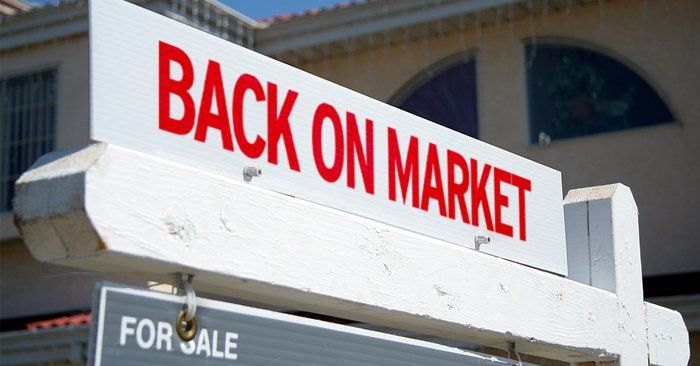
If you recently lost a house in a bidding war, be on the lookout for a second chance at it!
The Lighter Side of Real Estate • August 9, 2022

Many headlines would have you believe that bidding wars and houses selling for over the asking price are a thing of the distant past. But it was only a few weeks ago that buyers wouldn’t have dreamed of finding a house where that wasn’t the situation.

There have certainly been signs of the market softening a bit in favor of buyers, but bidding wars are still a thing, as well as houses fetching offers over asking price—even if it isn’t happening on every listing.

So if you’re a buyer right now, there’s still a good chance you’ve “lost” a house to another buyer within the past few weeks, and you’re still feeling the sting that comes with it. You may be wondering when (or if) the market will truly give you a fair shake at getting a house…

Well, don’t lose hope! In fact, you may even get a second chance at a house you lost to another buyer.

According to this recent Axios article, nearly 15% of pending home sales failed to close in June. Whether it was due to buyers not getting their mortgage, home inspection issues, the house not appraising for the sales price, etc., many sellers found themselves looking for a new buyer or going back to the buyers whose offers weren’t originally accepted.

So if you lost out on a house recently, there’s a chance you may get a second bite at the apple!

If and when that happens for you, here are a few things to keep in mind:

  • Don’t let your feelings get in the way of an opportunity. It hurts when a seller chooses another offer, and some buyers take it personally. Don’t hold a grudge and say you’re no longer interested for the sake of getting back at them for not choosing you originally.
  • You may be able to negotiate a lower price than you originally offered, but don’t bank on it. There’s still a low amount of inventory, and a lot of competition, so sellers aren’t entirely desperate. If you try to lower your offer, the seller may take offense and either go with another back-up offer, or just put it back on the market.
  • Don’t be too concerned with why the original buyer backed out of the deal; you may or may not get the true reason why the contract was canceled. Sure, it could’ve been due to home inspection issues, but maybe the other buyer made a big deal out of a little issue just because they had buyer’s remorse. Or maybe the buyer simply couldn’t get their mortgage because the rate changed and they could no longer qualify for the loan they needed. Just because another buyer had issues, doesn’t mean they were legitimate or will affect you, or that there’s something wrong with the house.

The Takeaway:

There are signs and headlines that the market is shifting in favor of buyers, but they’re a bit misleading. Houses that are desirable and priced appropriately in the market are still selling fast, with multiple offers, and often over asking price. So if you’re in the market to buy a home, you still need to be aggressive and make a strong offer.
However, if your initial offer isn’t accepted, don’t lose hope! With 15% of home sales falling through in June, there’s a chance you may find that the buyer they chose backs out and the seller checks to see if you’re still interested.
If that happens, be careful about lowering your offer, and don’t dismiss your second chance due to emotions or concerns about what was “wrong” with the house.


Share this post

By KCM February 9, 2026
Home Updates That Actually Pay You Back When You Sell Planning to sell this spring? While you may be tempted to hold off until the first blooms or the spring showers hit, that's actually waiting too long to get started by today’s standards. Buyers have more options than they did a few years ago. So, it's worth it to tackle repairs now and make sure your house is set up to stand out. Because you don’t want to be caught scrambling right before the spring rush. Or, running out of time to do the work your house really needs. The key is focusing on updates that actually matter. And that’s exactly where return-on-investment (ROI) data comes in handy. Which Projects Tend to Pay Off? Every year, Zonda looks at which home improvements deliver the most bang for the buck when you go to sell the home. And the results can be a little surprising. The green in the chart below shows the updates where sellers have the biggest potential to add value based on that research: While there's a wide range of projects represented in this data, the cool part is, some of the top winners aren’t big to-do's. They’re just swapping out doors. Small Updates, Big Visual Impact This goes to show little projects can have a big impact. So, you don’t have to spend a fortune. And you don’t need to tackle everything on this list. But in today’s market, doing nothing can work against you. Now that buyers have more homes to choose from, a lot of them are going to opt for what’s move-in ready. The best advice? Focus on what your house needs, whether it’s listed here or not – like the repairs you’ve been putting off. A front door or shutters in need of a little TLC. Piles of leaves in the yard. Scuffed up paint where your kids play inside. Those details matter too. Mallory Slesser, Interior designer and Home Stager, explains it to the National Association of Realtors (NAR) this way: “If you’re looking for affordable updates that pack a punch, dollar for dollar, I would say painting; changing out light fixtures; changing out hardware; maybe new draperies or window treatments. Those are all cost-effective ways to make a big statement. It really changes the space.” These seemingly small things help buyers focus on the home itself – not the work they think they’ll have to do after moving in. And that’s paying off for other sellers. Buyers are often willing to spend more on homes that feel well cared for, updated, and move-in ready. This Chart Is a Starting Point, Not a Strategy Here’s the important thing to remember. National data like this is a guideline. Buyer preferences are going to vary by location, price point, and even neighborhood. That means a project that boosts value in one area might be unnecessary (or even overkill) in yours. That’s why the first step should always be to talk with a local real estate professional before you start. An experienced agent can help you answer questions like: Which updates do buyers in your market expect? What can you skip without hurting your sale? Where will a small investment make the biggest difference? Is it better to update, or sell as-is ? That guidance helps you avoid over-improving and under-preparing. Bottom Line If you’re looking to sell this spring, you still have time to make updates that help your home stand out – without taking on a full renovation. If you’re not sure where to start, let’s talk through what makes sense for your house. A quick conversation can help you prioritize the updates that’ll pack the biggest punch. What’s one upgrade you’ve been thinking about – and wondering if it’s worth it?
By KCM February 2, 2026
The body content of your post goes here. To edit this text, click on it and delete this default text and start typing your own or paste your own from a different source.
By KCM January 28, 2026
Are Big Investors Really Buying Up All the Homes? Here’s the Truth. It’s hard to scroll online lately without seeing some version of this claim: “Big investors are buying up all the homes.” And honestly, if you’re a homebuyer who’s lost out on a few offers, that idea probably sounds believable. When homes are expensive and competition is tight, it’s easy to assume giant companies are scooping everything up behind the scenes. But here’s the thing: what people assume is happening and what the data actually shows aren’t always the same. Let’s look at what’s really happening with large institutional investors in today’s housing market – because the numbers tell a much different story than the headlines. The Number Most People Won’t See Online Let’s start with the most important stat. According to John Burns Research & Consulting (JBREC), large institutional investors – those that own 100 or more homes – made up just 1.2% of all home purchases in Q3 of 2025 (see graph below): That’s it. Out of every 100 homes sold, only about 1 went to a large institutional investor. And here’s an important point that often gets missed: that level of investor activity is very much in line with historical norms. It’s not unusually high, and it’s actually well below the recent peak of 3.1% back in 2022 – which itself was still a small share of the overall market. So, while it can feel like big investors are everywhere, nationally, they’re a very small part of overall home sales. Why Investor Activity Gets So Much Attention There are two main reasons this topic gets so much attention: Investor activity isn’t spread evenly. Investors are more active in certain markets, which can make competition feel intense for homebuyers in those areas. As Lance Lambert, Co-Founder of ResiClub, explains:“On a national level, “large investors”—those owning at least 100 single-family homes—only own around 1% of total single-family housing stock. That said, in a handful of regional housing markets, institutional and large single-family landlords have a much larger presence. ” Investor is a broad term. Part of what makes the share of purchases bought by investors sound so big is because many headlines lump large Wall Street institutions together with small, local investors (like your neighbor who owns one or two rental homes). But those are very different buyers.In reality, most investors are small, local owners, not massive corporations. And when all investors get grouped together in the headlines as a single stat, it inflates the number and makes it seem like big institutions are dominating the market (even though they’re not). Yes, big investors exist. Yes, they buy homes. But nationally, they’re responsible for a very small share of total purchases – far smaller than most people assume. The bigger challenges around affordability have much more to do with supply, demand, and years of underbuilding than with large institutions competing against everyday buyers. That’s why it’s so important to separate noise from reality, especially if you’re trying to decide if now is the right time to move. Bottom Line If you want to talk through what investor activity actually looks like in our local market, and how it impacts your options (or doesn’t), let’s connect. Sometimes a little context makes all the difference.
Show More